Microbiology and Health of the Soil
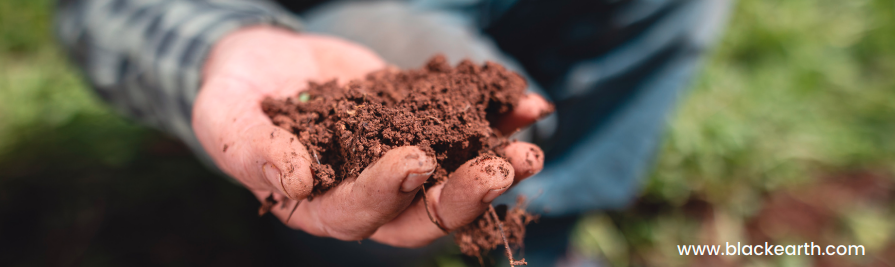
As we have previously mentioned, there is a close relationship between soil microbiology and organic matter; of course, this relationship also directly affects soil health. This premise is also fulfilled, healthy soil produces healthy crops.
We can summarize an irrefutable formula, soil that has a good organic matter content, is microbiologically balanced, and is a soil that produces healthy crops.
In general, there is no microbiological balance without organic matter, and there is no proper cycle of organic matter without Microbiology. This seems simple, however. It is not easy to achieve, since through conventional production practices, we have broken that desired balance for years, and this balance is not easy to restore, especially when due to financial aspects, the reinvestment in the restoration is not reflected in the short term.
When we refer to organic matter, there are different types and of course, this also influences the type of microflora that we stimulate in the soil when it is incorporated. For example, when we introduce large amounts of organic matter into the soil, we stimulate the development of a large number of certain types of decomposing microorganisms, which are also associated with the type of organic material we are incorporating.
For this reason, when we are interested in carrying out some type of soil remediation to increase the health of the soil and therefore that of the cultivation or exploitation that we have in it, we must be very careful in the selection of the organic matter that we are going to to be used, taking into consideration the Source of the materials, the handling that was given to the material, the amount to be used, as well as the form and moment of the application.
Theoretically, it has always been said that organic matter is beneficial for the soil and that it will also help the health of the crops, however, this premise is not always fulfilled, the incorporation of poorly processed organic materials, incorporated at inappropriate times, in quantities disproportionate, they can cause microbiological imbalances and very serious problems to the soil and to the crops and farms that are carried out on it.
That is why we must have an adequate and well-done analysis of our soil, of the options that we have to use, of the moments and the amounts that we must incorporate, introducing organic matter just to do it, without any type of analysis and consideration is committing the same mistakes of the past, the same ones that in regenerative agriculture we have not opposed, in the end, the bill could be high.
In this article, we present an organic material that is a very safe and well-studied alternative that can provide you with interesting options to stimulate the microflora of the soil and its health, as a source that will help you combat many of the current diseases in the soil. crops product of microbiological imbalances and organic matter in soils exploited for so many years.
Humalite is a natural material, originating from mining deposits, they are humic acids formed derived from the degradation of organic material that for millions of years have been mineralized in the presence of an associated Microbiology that formed a material with a high concentration of very stable humic acids. These humic molecules, when loaded into the soil, are capable of stimulating certain types of beneficial microorganisms. Being very stable structures from the molecular point of view, they are not subjected to accelerated activation processes and therefore only stimulate organic matter decomposers. On the contrary, they are stimulators of other types of microorganisms associated with other functions in a more comprehensive way. When we talk about microorganisms from the functional point of view and their relationship with plants, we can group them into the following:
1. Pathogens: They are the best known by all since they are responsible for diseases, there are many, known and studied. We know its negative effects on plants, for example, Fusarium sp
2. Antagonistic: They are a group of microorganisms that through research have been shown to perform one or more functions with which they attack the pathogens mentioned above, for example, Trichodema Harzianum.
3. Rhizospherics: They are a large number of microorganisms that live linked to the roots of plants and perform a series of fundamental functions in the physiology of plants, as well as in the biology of the soil, their own functions such as the solubilization of fertilizers, synthesis of growth regulators, activation of resistance mechanisms and many other functions in ecosystems, for example, Azotobacter.
4. Mycorrhizal: They are a set of microorganisms already identified that have a symbiotic relationship with the roots of plants, this relationship is closely associated with nutrition, stimulation, and bioregulation of plants in general, for example, Glomus
5. Endophytes: Today we know that there are many microorganisms that have the ability to enter through the vascular tissues of plants without causing damage, if not, on the contrary, they perform some important functions for the plant, such as the activation of resistance mechanisms. systemic, growth regulators combat pests and diseases. An example is Bacillus Thuringensis
6. Unrelated: The vast majority of microorganisms that have been discovered and those that we have not discovered fall into this group since it is known that there is a great diversity and science has not been able to determine or associate specific functions or any relationship with the plant However, within this group, we do have some microorganisms that perform functions that are not directly related to plants, but that do perform very important functions for the life of other beings that do have a more direct relationship with plants and the control of The diseases. Many of these microorganisms are initiators of life, giving rise to trophic chains, for example, some microorganisms have the ability to photosynthesize and therefore provide energy and food to those who do not have that ability, these microorganisms also oxygenate the soil. for those who require them, they can fix nitrogen as a fundamental element for the generation of life, they are carbon fixers when breathing and doing photosynthesis. Other microorganisms have the ability to solubilize elements that are not very available to other microorganisms, such as siderophores. There are many benefits in the balance that many of these microorganisms can provide and indirectly benefit plants. A great example of these is the cyanophycean bacteria or cyanobacteria.
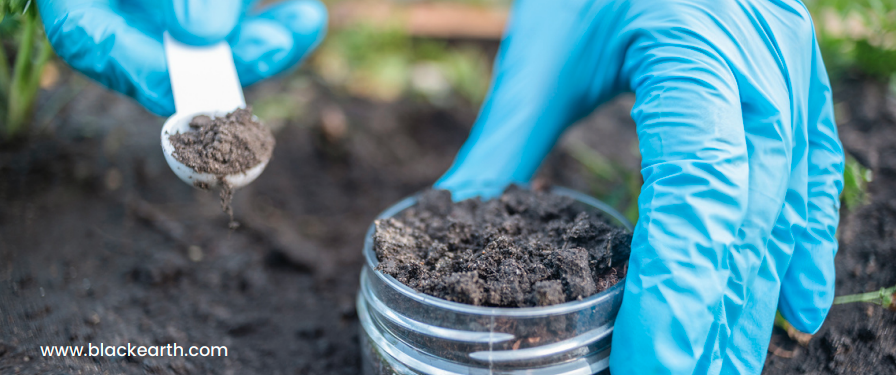
At Black Earth, we have focused on carrying out scientific research aimed at understanding the microbiological environment associated with the formation of humalite and the microbiological richness of this material, and its impact on the balance and health of the soil and plants.
Using technology from specialized laboratories through molecular identification using real-time PCR, we have been able to identify microbiology associated with humalite, which contains various microorganisms that complement the beneficial effect that humic molecules alone have.
Among the groups of organisms, we group them into Eukaryotes and Prokaryotes. Within the Eukaryotic microorganisms, we have several groups of beneficial microorganisms that are attributed functions such as growth promoters, generators of secondary metabolites, and antibiotic exudates, which also contribute to biological control such as Penillilium sp, Aspergillus versicolor, Sporidiobolus pararoseus, Talaromyces radicus, xylaria sp. Also within this group, we have saprophytic microorganisms that have the ability to feed on organic matter in the process of development and power available to plants and other nutrient microorganisms and compounds suitable for their development, within these, we have identified trechispora alnicola, acremonium sp , guehomyces pullulans, aureobasidium pullulans, hamigera fusca and eupenicillium rubidurum.
Within the group of Prokaryotes, we have another extremely interesting group, standing out in the first place and with a very high population, the cyanobacteria, which are very primitive organisms, associated with the material for millions of years, they are the first beings that populated the earth, they are the initiators of life and existed long before plants, they are photosynthetic, breathe CO2 and release oxygen into the atmosphere, research indicates that these microorganisms were responsible for generating the atmosphere we know today, having such a primitive origin the atmosphere does not It was oxygenated, so at night, when there was no sunlight and it could not photosynthesize, and therefore breathe CO2, its respiration process was carried out using atmospheric nitrogen, reducing it to nitric nitrogen, which is why these microorganisms are considered as free flow nitrogen fixatives. This is a source of nutrition for the ecosystem mainly for other microorganisms, however, at some point, they may be available to plants.
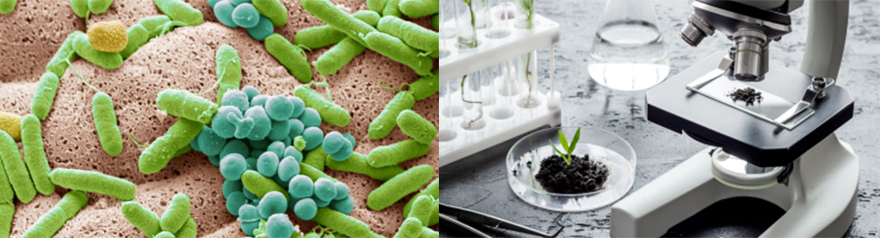
Among the cyanobacteria identified we have: anaerobranca gottschalkii, conexibacter spp, dethiobacter alkaliphilus, aciditerimonas ferrireducens, thermoflavimicrobium spp., prochlorococcus spp., methanosaeta sp. A very relevant aspect is that these groups of microorganisms are highly resistant to adverse and extreme conditions, which is why they are very suitable microorganisms for restoring soils in highly degraded and extreme conditions.
Also, within the group of Prokaryotes we have beneficial microorganisms that work as growth promoters of other plants, inducing resistance responses in plants, through biological combat by antibiosis, mycoparasitism or competition. Those that we identified are: penicillium citreonigrum, actinoallomurus spp. actinoallomurus purpureus, bacillus longiquaesitum, saccharopolyspora cebuensis, labedella sp., actinomadura nitritigenes, actinoallomurus sp., bacillus cellulosilyticus, alkalibacterium sp., psychrobacter sp., acidobacterium spp., alkalibacterium sp., ferrimicrobium spp., proper nibacterium acnes, gryllo talpicola sp, bacillus halodurans , bacillus sp.
Several scientific experiments and formal investigations have denoted that when talking about microorganisms that regenerate soils, it is extremely important to be able to work with consortia of microorganisms that perform different functions in the ecosystem, since only the incorporation of a microorganism, no matter how efficient it may be in a specific role, you can’t do it all alone. To promote microbiological balance, it is necessary to be able to reintegrate moist carbon sources into the soil ecosystem with all the benefits that they provide from the physical, chemical and biological point of view, but also to make use of microbial consortia that perform multiple functions in different pathways. that allow health to be returned to the soil over time, after all the imbalances to which they have been subjected for years in traditional farms.
Given the analysis, it is evident that humalite is not only the best source of humified carbon that exists, but also that nature gave us this material with a balanced biological biodiversity that allows it to be the best source of bioremediation of degraded soils and crops. attacked by diseases associated with microbiological imbalance such as Fusarium, phytoptora, Phytium and many other diseases already known to all.