Water Holding Capacity of Humics
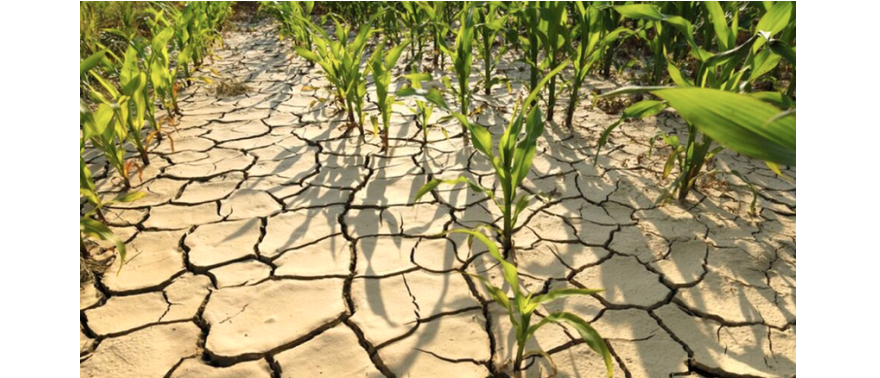
Humic acids are a group of compounds with different physical-chemical characteristics that allow them to perform different restorative functions in soils, mainly those that have been degraded due to intense agricultural exploitation.
Humic acids are amorphous molecules of high molecular weight with large carbon chains that contain functional groups, predominantly in the high molecular weight ones, the phenolic (OH) and carboxylic (COOH) groups, and in the lower molecular weight ones, the aromatic and aliphatic ones. These molecular characteristics make humic acids have a large number of positive charges and negative charges that makes them have an amphoteric power, that is, the ability to react with both cations and anions; this characteristic of bipolarity makes it so that in the presence of the water molecule (H2O) there is an attraction that allows the water molecules to adhere to the humic acid molecules, causing hydration of the substances, which is manifested as retention of water or humidity. It is established that a humic acid molecule can retain up to 20 times its molecular weight in water. This water retention capacity also occurs when we introduce humic acids into different types of soils, resulting in the way of retaining moisture in a soil that is at a particular moment in water deficit, which translates into a decrease in the stress caused by due to lack of water in different crops.
Farming and tillage practices used continuously harm soil texture and structure. Several studies have shown that applying humic acids positively affects the texture and structure of degraded soils.
Different studies have reported that humic acids increase the soil’s water retention capacity. The hydrophilic water-attracting part of humic acids and improved soil structure increase the soil’s water-holding capacity. It has also been reported that the combined application of humic acids and fulvic acids has a high probability of forming colloids or humic-clay complexes, increasing the soil’s water retention capacity. The application of humic acids has also been shown to increase compatible solutes such as proline and glycine betaine in plants, which is an adaptive strategy for plants under water stress.
Heavy clay soils are compacted, which restricts root growth and has less ability to absorb and retain water. When the water arrives, it will likely run off the compacted surface. Adding humic acids to dense soils incorporates oxygen, aerating the soil around the roots to allow for healthy root growth and transporting water and nutrients to the root zone for use as needed.
Sandy soils are too loose to hold water and nutrients; in this case, humic acid acts like a glue to hold the soil together and again provide moisture and nutrients around the roots.